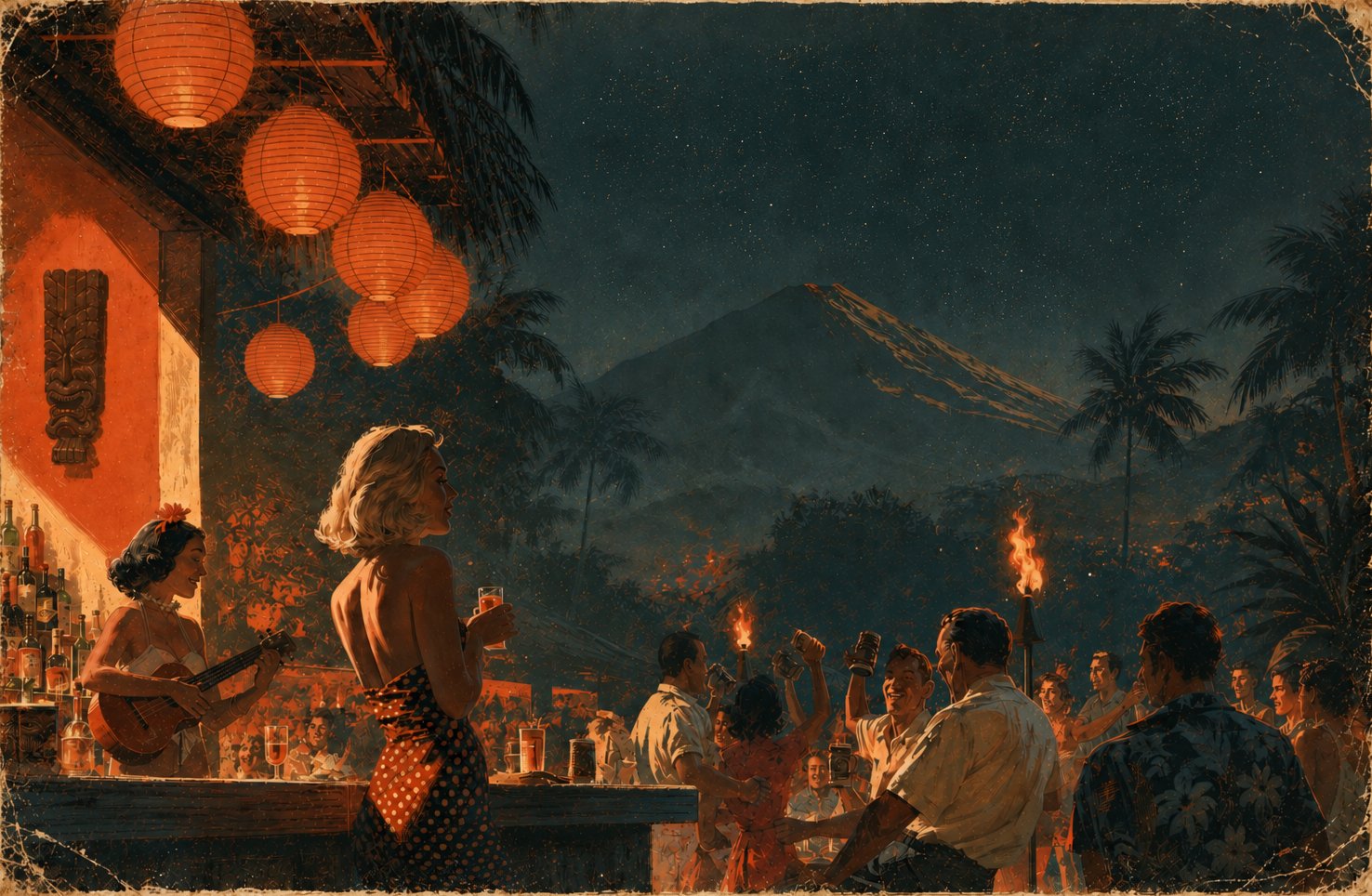
A guitar player and guests at the Outpost No. 9 bar counter at night, with a volcano in the distance

Outpost No. 9

A South Seas trading post, reopened as a tiki bar

You better chase a maybe than leave a maybe behind.

Kato Stalos, Crete·Est. 1931

Reopening March 2027

A Corner of a Map

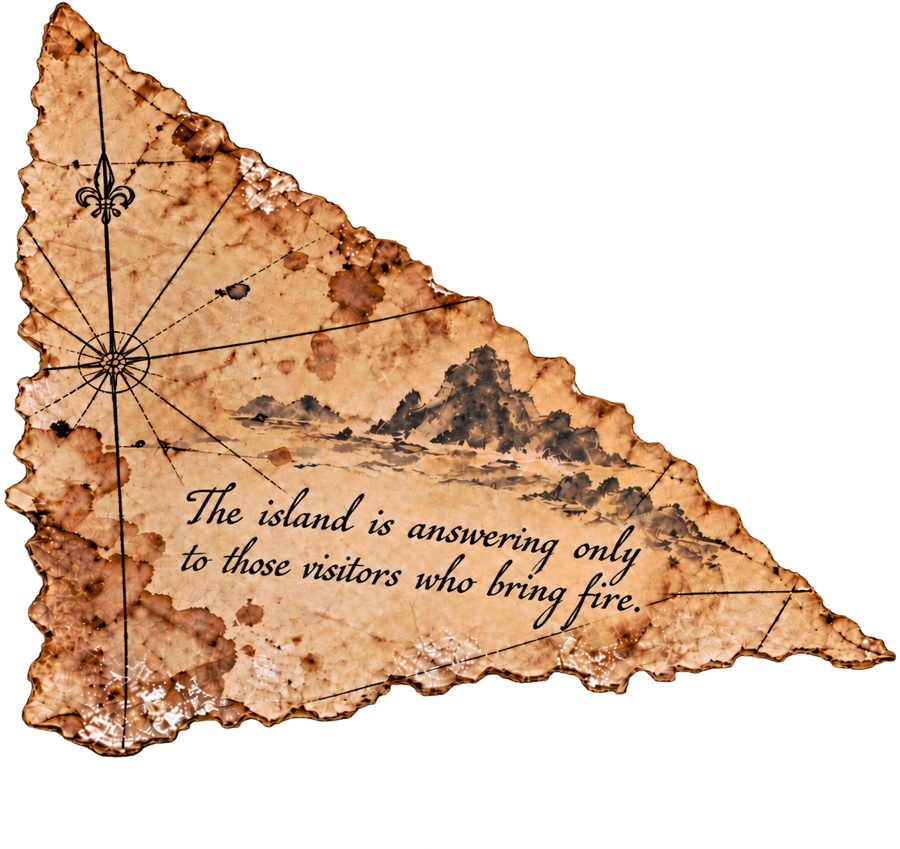
Marseille, 1925. In a chandlery drawer of water-damaged paper being sold by weight — which tells you everything about its perceived value — the young Cretan captain Alekos Drakonas found a corner of a map: torn diagonally, missing its cartographer, its title, its scale, and roughly nine-tenths of its actual self. What remained was a bearing, a smear of ink that might have been a wave or a mountain, and eleven words in a stranger's hand:

"The island is answering only to those visitors who bring fire."

He bought it with the money meant for rope. His first mate, Manolis Vlachakis — who appears throughout this story as the voice of the entirely reasonable — put it best: "You have bought a corner." Which is unanswerable, and true. He did not know what the words meant. He would not know for two more years, and one continent-sized humiliation.

The torn map fragment, reading: the island is answering only to those visitors who bring fire
Alekos standing in a rowboat, lantern raised over his head with both hands, the volcanic island of Hiva Marama behind him

One Lantern

He arrived at dusk to an island that looked abandoned. It wasn't. Three hundred and eleven people were watching him from the treeline, every one of them armed, and every one of them taught from childhood what a ship at dusk means. The island had learned, at enormous cost, a standing procedure for sails on the horizon: put out every fire. Go into the hills. Wait.

A ship that comes hunting arrives dark — that is the whole trick of the trade. So Alekos did the precise inverse. He lit his last lantern, got into the boat alone, and rowed to that shore holding it over his head with both hands the entire way in, not knowing whether it was a signal, a password, a sacrament or nothing at all. He could not hide. He could not run. He could not hold a weapon. He was, in the most literal available sense, offering them the shot.

The first person he saw was standing on the sand with a torch of her own. Her name was Teura. The four people on that island qualified to judge whether the approaching lunatic was what he appeared to be had drawn lots, and she had lost. I am told she said so, later, frequently, and at parties.

"The whole island holding its breath to see what I would do." — A.D.

Teura, of the Ariki-Tai

Her clan were not priests. They were navigators — the sea-line, forty generations deep, who held the star-paths: memorized sequences of horizon stars, swell direction, cloud shape and bird behaviour that let Pacific voyagers cross thousands of kilometres of open ocean without instruments, without charts, without writing, and still find their way home.

The knowledge lived in bodies, not objects — nothing that could be stolen, because it was never in a thing. Which is exactly why the arithmetic, when it arrives, is unbearable. In 1863, sixty-one people were taken off this same beach in one morning. The smallpox that came back with the eleven who did return took half of everyone left. In 1908 an expedition — German, scientific, thorough, and impeccably polite — took every star-chart the clan possessed as specimens. The charts were teaching aids. The archive was the navigators. By Teura's generation there were four of them left.

She was the youngest. The only woman. The last one anyone trained — right up until the evening a lunatic rowed in with a lantern over his head, and somebody had to go and check.

The mountain is not a god.
The mountain is a clock.

— from the journal

Three cloaked members of the Order of the Ninth Wave, one holding a lantern, one bearing the three-waves flag, one keeping watch with a telescope

The Ninth Wave

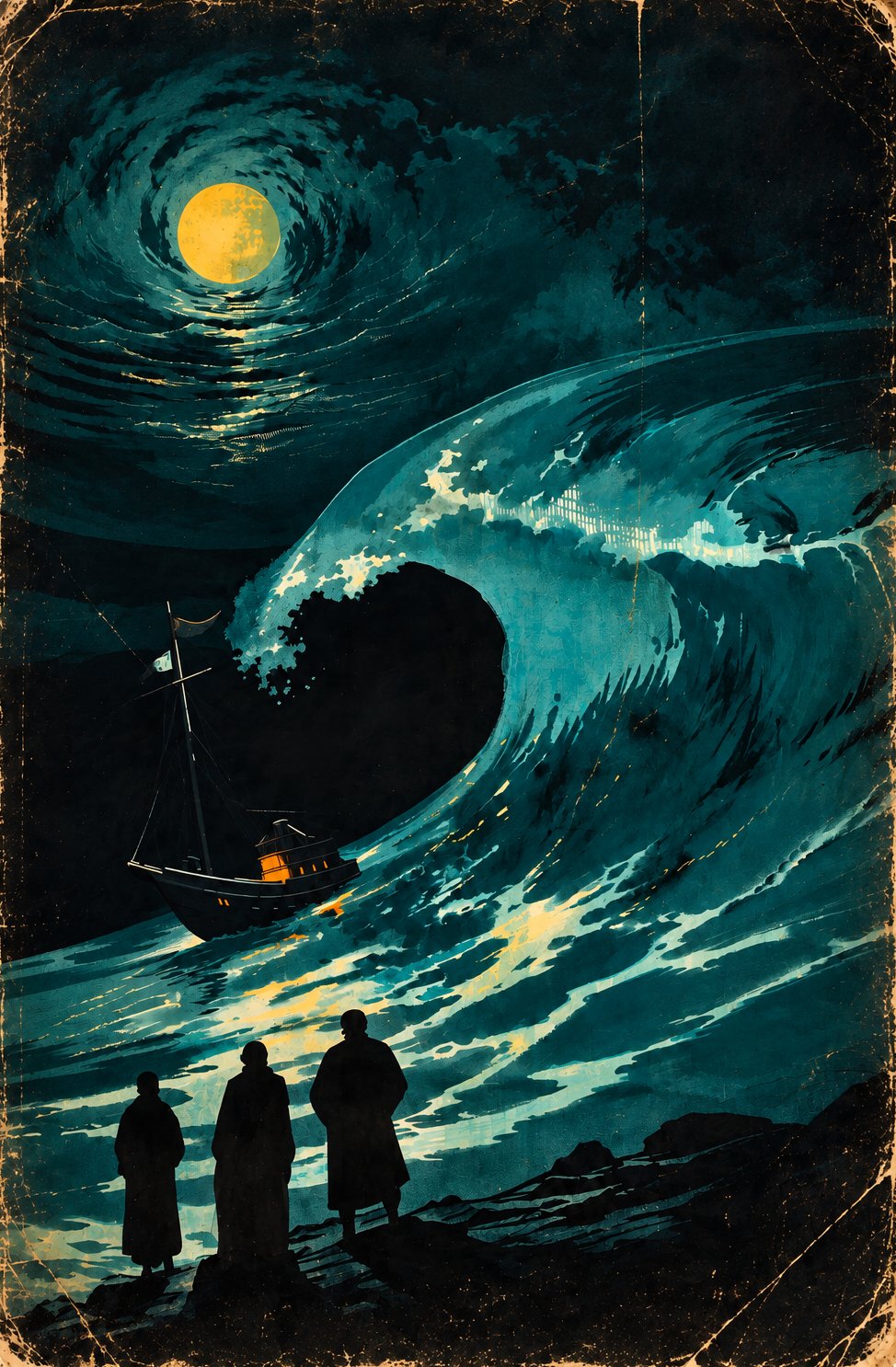
Sailors have always believed the ninth wave comes largest, and takes who it intends to keep. Older law drew the line differently: the sea belonged to shore only as far as the ninth wave reached. Past it, there was no king, no court, no protection — you were, legally speaking, nowhere at all.

The Order took its name from that line. It is not a society for people who travel; it is a society for people who have been past the line where the law ends, and chose to behave decently there anyway. Nobody joins. There are no dues, no charter, no headquarters and no records, and if you ask a member directly they will deny the whole thing exists while ordering you a drink, which is of course the confirmation. Alekos — rowing towards an unknown beach at dusk with a light held over his head and both hands full — was Order material a good decade before he ever heard the name.

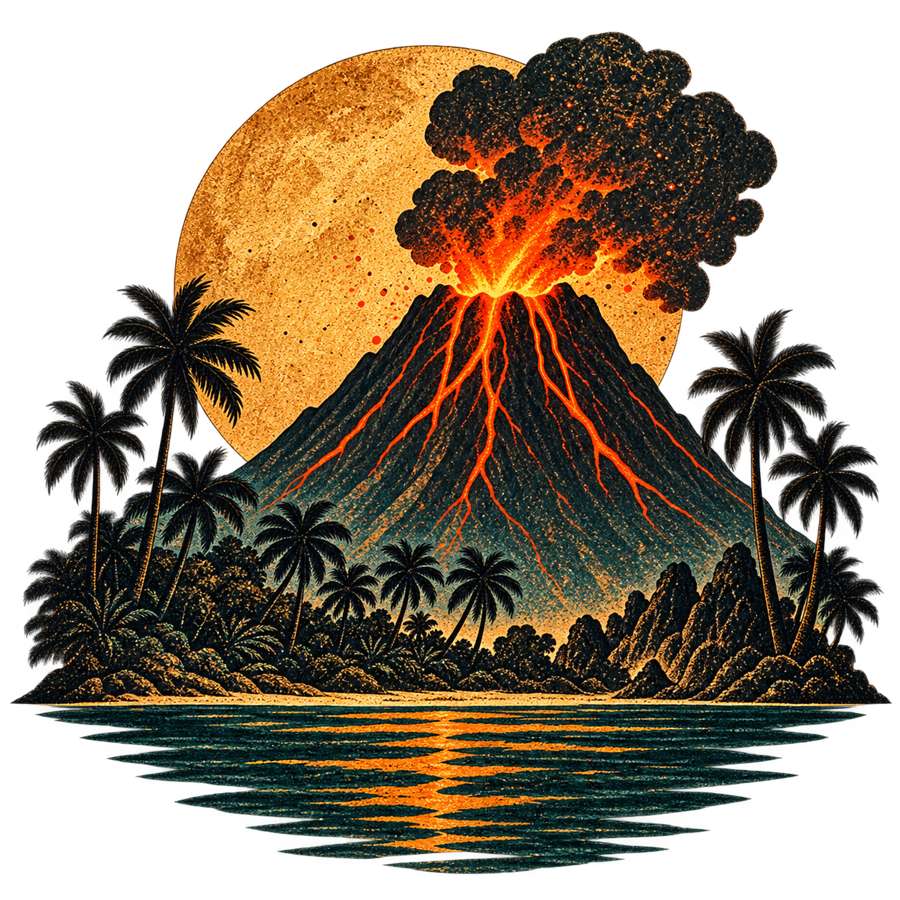
The Order was one thing the island gave him. The other was the hour. The volcano above the village vents on a rhythm — not a perfect one, it is a volcano, not a Swiss export — but reliable enough to set a course by, and audible thirty kilometres out at sea. It was not worshipped. It was kept time with: fire, and drink, and the noise of people glad to be alive, matched against the mountain's own clock, so that anyone still out on the water in the dark had something to steer home by.

He kept that hour for twenty-two years, out of politeness and rum and love, thinking the whole time that it was a charming superstition he was humouring. Then, in 1949, he sailed out one night and did not come back — and the hour he had been keeping for other people's missing turned out to have been waiting for him the entire time.

It looks like a navigational aid. It never really was one. The fire and the noise were proof the shore was occupied: for whoever might still be out there, and in the same breath, for the ones everybody already knew weren't coming back. It was never one or the other.

Alekos is simply the name this building happens to know. He isn't the only one the hour has ever been kept for, and he won't be the last. Everyone who sits in this room carries someone of their own worth not forgetting.

You are, as of tonight, on the Watch.
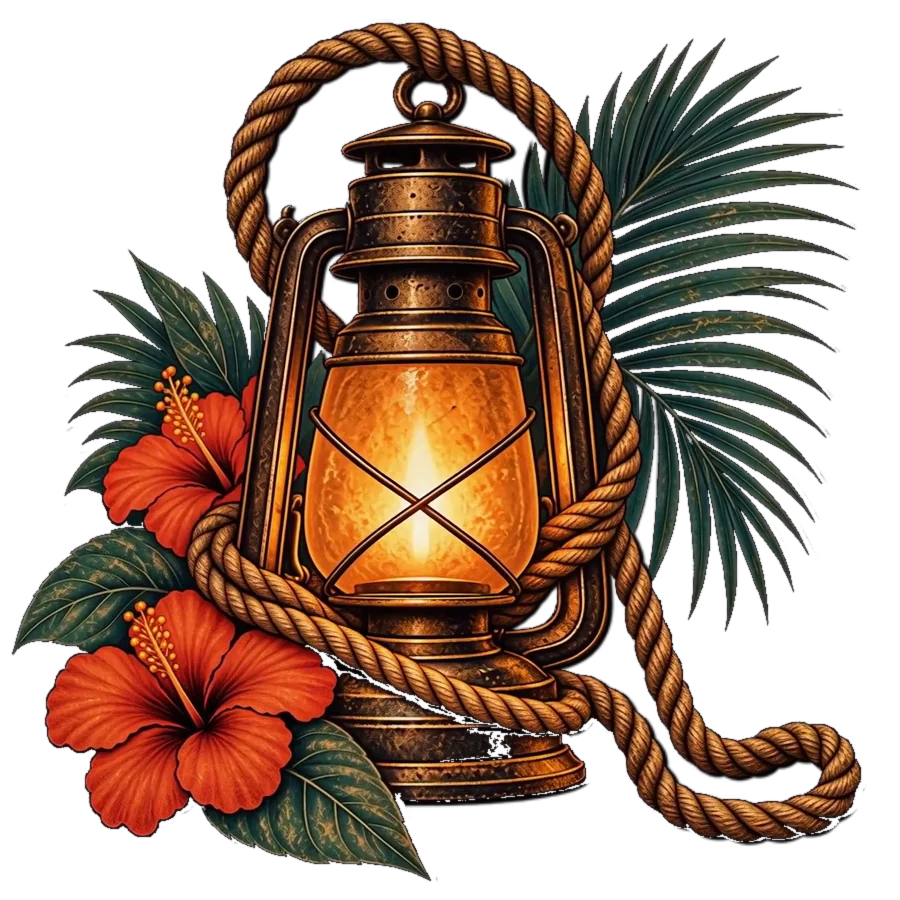
A brass lantern wrapped in rope, with hibiscus flowers

On the Hour

The mountain on Hiva Marama vents once an hour, near enough to set a course by. The Outpost answers it the way the island always did: fire, a glass raised, and enough noise to prove the shore is occupied — for whoever is still out on the water, and, in the same breath, for the ones we already know are not coming back.

Pour the shot. Raise it. Empty it together. Make some noise.

--:--

until the next pour

On the hour, this button does something else.

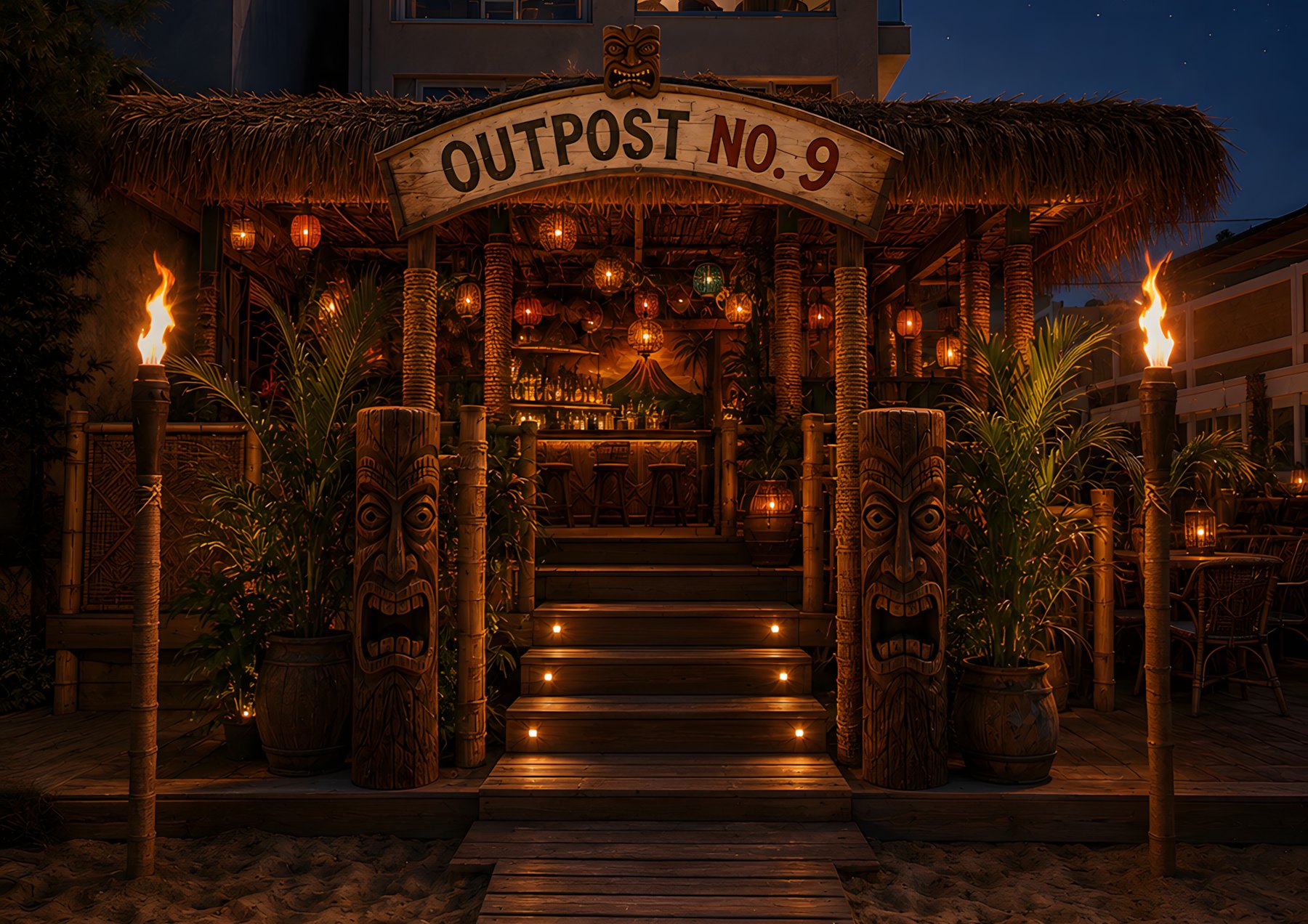
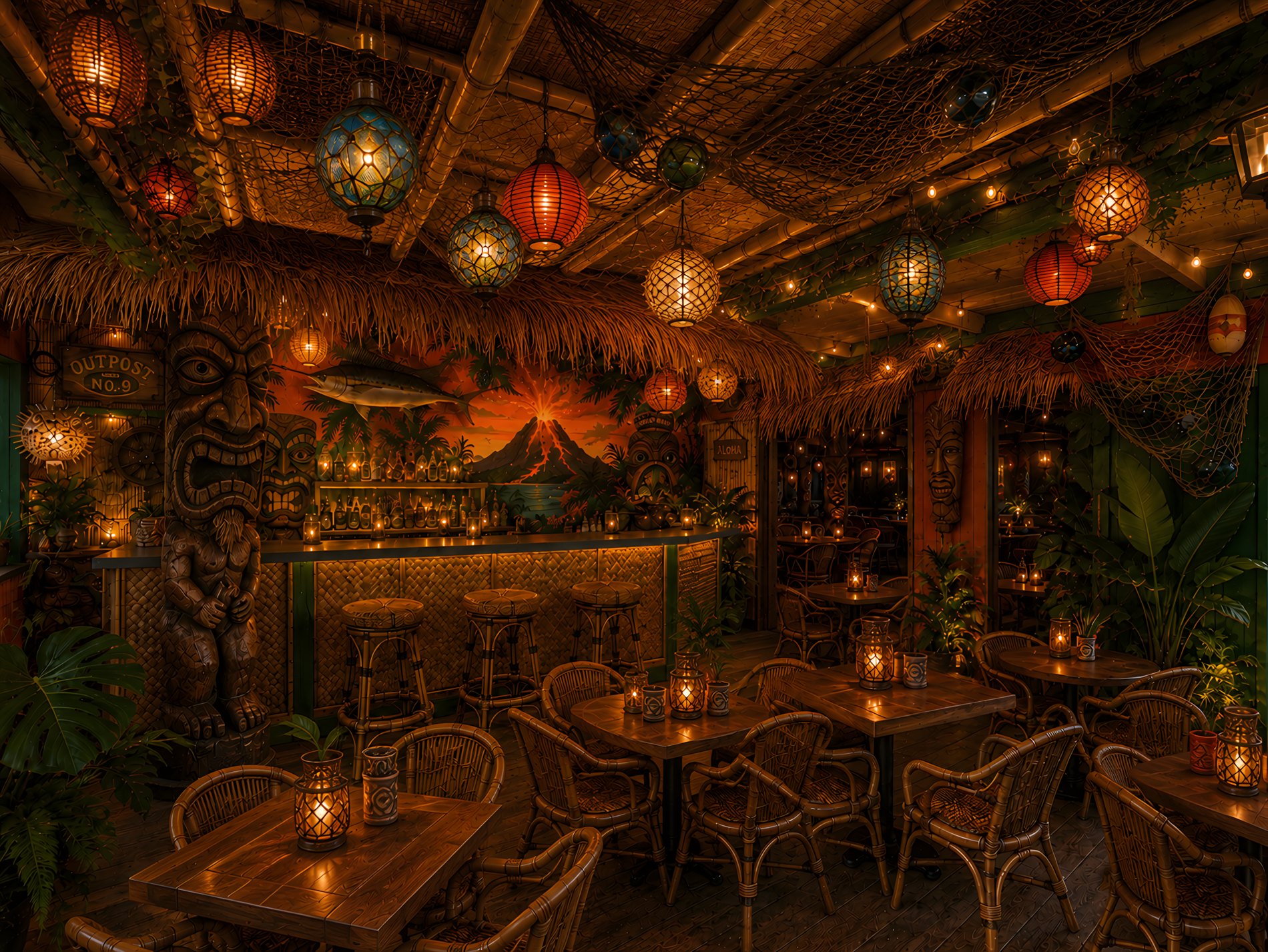
The Outpost No. 9 beachfront entrance at night: thatched roof, the sign, tiki torches, and totems flanking the steps up to the lit bar Inside Outpost No. 9: the bar counter beneath glass float lanterns, a volcano mural behind the bottles, tiki totems and rattan seating

And Now

The post stayed sealed for a very long time. We found it. We opened it. Swept out sixty years of dust and the particular smell of a room shut since before anyone alive remembers it open. The masks were still on the walls, facing outward, towards the water. The charts were still in the drawer. And the mountain — small, made by hand, built for one purpose and no other — was still standing exactly where he left it.

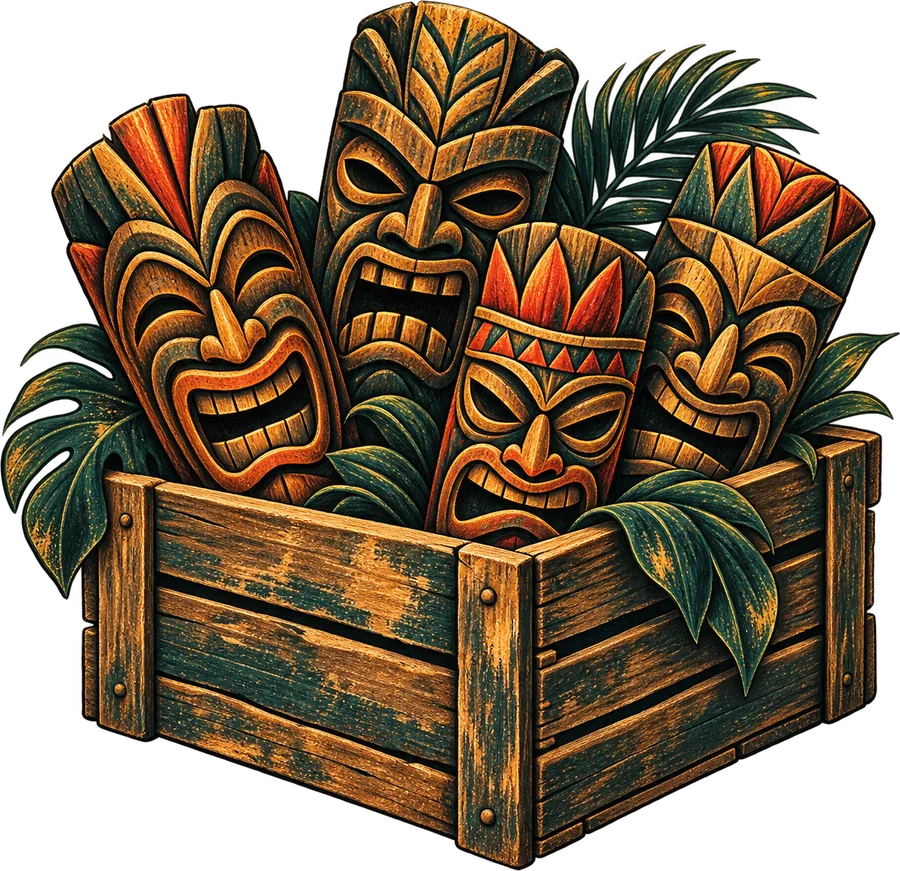
Why a South Seas trading post on a Cretan beach? Because this was Alekos's end of a trade route that made no commercial sense whatsoever, which is precisely why it lasted twenty years: olive oil and wine went east-then-further-east until they were west, and rum, carved gods, shell and pearl came back the other way. The Pacific has been arriving in Chania by the crate since 1931.

So: we are not decorating a bar. We are reopening a trading post — as a tiki bar, because that is what a South Seas trading post on a Cretan beach turns into if you let it. There is a difference, and it is not merely a matter of marketing, though I appreciate that is exactly what someone in marketing would say.

Keep scrolling to go in
The lantern will actually be lit. On the hour. Starting this March.

Where the Party Never Ends

We didn't build this to be reverent. The Watch is real, the hour is real, but nobody's asking you to sit quietly and think about a man who's been gone since 1949. Alekos would have hated that.

What we actually want, as a tiki bar: good rum, Cretan ingredients doing something unexpected, a soundtrack written for this room and nowhere else, and a crowd that mixes locals off a Tuesday shift with tourists who wandered down from the beach road. The kind of place where the mythology is furniture, not homework.

Then, on the hour, the mountain does what it does, and for about ten seconds the whole bar does the same thing at once. Then it goes back to being loud.

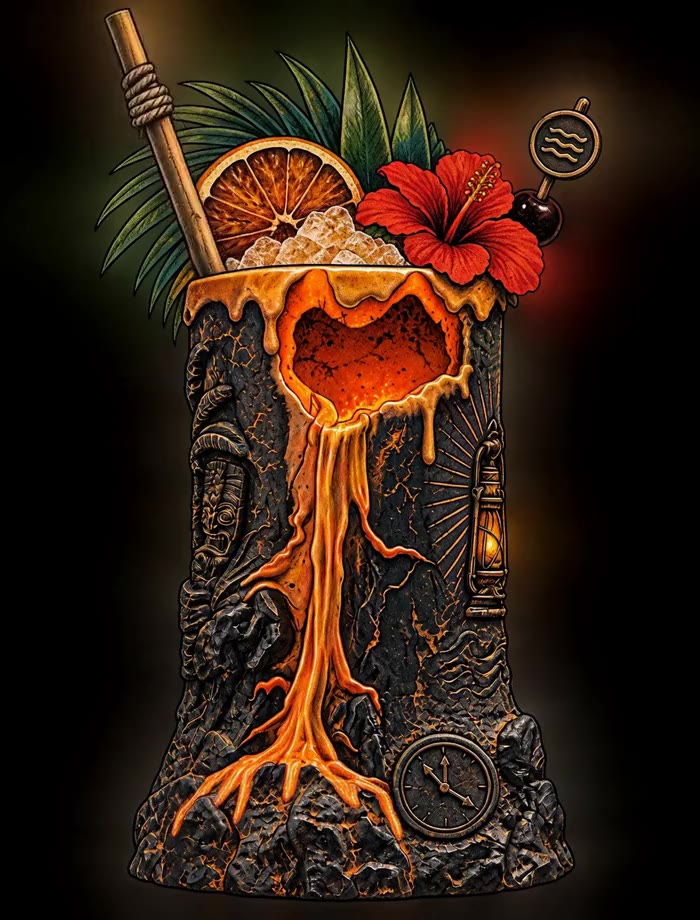
Some of it you will be able to take with you, eventually — mugs, pendants, pins of the five figures from the archive, and the soundtrack itself: sixty-two songs pulled from the same story. Nothing to show yet. It's coming.

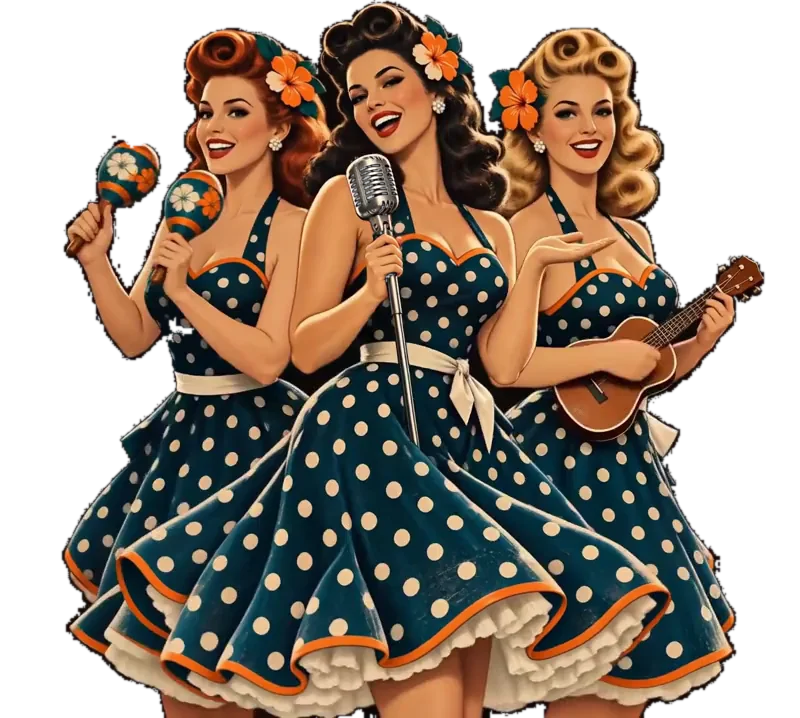
A vintage-style illustration of three singers with a microphone, maracas and a ukulele
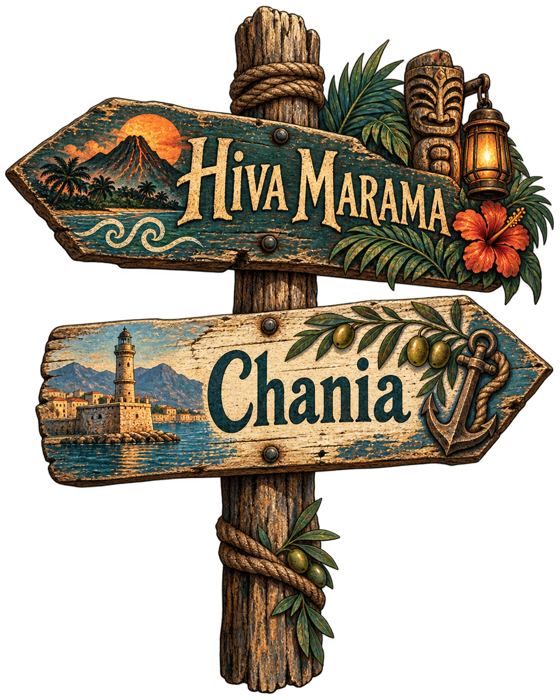
A wooden signpost pointing to Hiva Marama and Chania, Crete

Be There When It's First Lit

Leave your email and we'll send word before the doors open. Nothing before then.

Welcome aboard. We'll be in touch before the lantern's first night.